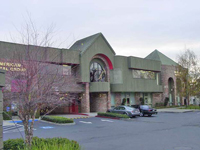
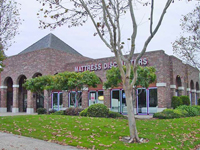
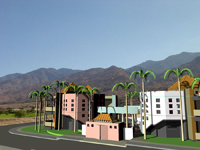
Rooftop PV
www.RooftopPV.com

Rooftop PV

Rooftop PV, Distributed PV and Solar Cogeneration Systems Installed at Zero Cost for 
Qualified Commercial and Industrial Clients with our
Power Purchase Agreement


Rooftop PV Systems

Ad Space Available Through the Renewable Energy Institute


Renewable Energy Institute
"Changing the Way the World Makes and Uses Energy"


For more information, call/email 
the Renewable Energy Institute

info@RooftopPV.com


_____________________________________________________

The market for "Distributed PV" is projected to double from 
$30 billion/year in 2008 to $60 billion/year in 2013!
http://www.electronicsadvocate.com/2009/09/09/distributed-pv-market-to-reach-nearly-60b-by-2013/

_____________________________________________________

“spending hundreds and hundreds and hundreds of billions of dollars every year for oil, 
much of it from the Middle East, is just about the single stupidest thing that modern 
society could possibly do. It’s very difficult to think of anything more idiotic than that.”

- R. James Woolsey, Jr., former Director of the CIA


Price of Addiction
###
to Foreign Oil


Solving America's Energy Problems Through
The:


American Energy Plan sm

www.AmericanEnergyPlan.com


"America has NEVER had an Energy Plan. 
America, now more than ever, needs an Energy Plan."
~ Monty Goodell - Renewable Energy Institute


For more information, call/email:

info@RooftopPV.com


________________________________________________________

Rooftop PV
www.RooftopPV.com


What is Rooftop PV?

Rooftop PV or rooftop photovoltaics is a form of "distributed solar generation" or "dispersed generation" except that the form of power (electricity) generated comes from the Rooftop PV solar electric power system 

_____________________________________________________


GreatSkin.com


_______________________________________________________

What is Distributed PV?

Distributed PV is a form of "distributed solar generation" or "dispersed generation" except that the form of power (electricity) generated comes from the Rooftop PV solar electric power system.


What is "Distributed Solar Generation"?

Distributed Solar Generation, is a form of "Distributed Generation" except that the renewable energy that is generated "onsite" (on the customer's rooftop) is through solar energy systems.

Distributed Solar Generation is the opposite of "centralized generation" wherein the electricity is generated at "central power plants" that are sometimes located hundreds of miles away from a "load center" where the customers are located. Central power plants generate electricity by burning fossil fuels or through nuclear energy. Either way, central power plants are highly inefficient - especially when they are located far from the customers buying their electricity, and in the case of fossil fuels, like coal fired power plants, are responsible for about 40% of the planet's greenhouse gas emissionsDistributed Solar Generation produces ZERO greenhouse gas emissions.

Distributed Solar Generation - while not completely accurate, has also been referred to as; onsite power generation, dispersed generation, or decentralized energy.  

Distributed Solar Generation is a method of generating electricity and other forms of energy, such as hot water from evacuated tube collectors, from systems that are installed at the locations that the power and energy is needed - thereby eliminating the need for inefficient "central" power plants typically owned and operated by electric utility companies.  

Increasingly, more and more distributed generation systems are being installed with renewable energy technologies such as solar energy systems.

_____________________________________________________

About us:

We provide engineering and renewable energy project development services including including;

Our work is performed on a strict adherence to "vendor-neutrality." We are client and project focused and seek to maximize our client's return on their investment while simultaneously minimizing their operational expenses and environmental exposure. 

Engineering and related interim project development expenses may be at client's expense but will be refunded at the close of Power Purchase Agreement or other project financing.  Some of our engineering and related EPC services provided by our top-ranked ENR Engineering/EPC partner companies .


For qualified clients we will design, build, finance, own, operate and maintain a new:

Cogeneration

Distributed PV

EcoGeneration

Rooftop PV

Solar Cogeneration

Solar Trigeneration

Trigeneration

Waste Heat Recovery

or other onsite "EcoGeneration" energy system, through a Power Purchase Agreement  
that guarantees a minimum 10% reduction in our client's energy expenses.

(NOTE:  Engineering and related interim project development expenses may be at client's expense but will be 
refunded at the close of Power Purchase Agreement or other project financing.  Some of our engineering 
and EPC services may be provided by one of our Top-ranked ENR Engineering/EPC partner companies.) 


To receive a preliminary no obligation consult, send us a summary concerning your energy, engineering or project plans:

info@CHPsystem.com

____________________________________________________

What is the "Unified Smart Grid"?

The Unified Smart Grid is the name used for the future transmission power lines that would carry green electricity from the many solar power plants and solar power parks and wind farms that generate the power, typically in remote areas, to the "load centers" or major cities that would use the green power. 

Quite simply, our country's out-dated and inefficient National Electric Grid, lacks the ability to carry all the new green electricity being planned from hundreds of new solar power parks and wind power generation facilities.

The Unified Smart Grid will be a national interconnected network relying on a high capacity backbone of electric power transmission lines linking all the nation's local electrical networks that have been upgraded to smart grids. Europe's analogous project is sometimes referred to as the Super-Smart Grid, a term that also appears in the literature describing the Unified Smart Grid

Cost estimates to rebuild the nation's electric grid as a Unified Smart Grid have ranged from $350 billion to $450 billion.

Support for the unified smart grid came with passage of the Energy Independence and Security Act of 2007.   Title 13 of this Act invested $100 million in funding for the years 2008 – 2012 and establishes a matching program to states, utilities and consumers to build unified smart grid capabilities.  It also creates a Grid Modernization Commission to assess the benefits of demand response and automated demand response and recommended a set of system protocols and standards to be led by the National Institute of Standards and Technology which would coordinate the development of smart grid standards.  FERC would then promulgate these standards and protocols for the unified smart grid through its official rulemaking capabilities.

The Unified Smart Grid received further support with the passage of the American Recovery and Reinvestment Act of 2009 that set aside $11 billion for the creation of a smart grid.

Building a Unified Smart Grid would help jump-start the renewable energy investments in solar power parks.  Thousands of megawatts of new solar power parks (both Concentrating Solar Power plants and Photovoltaic Power Plants) are being planned. Most are  located in the desert Southwest due to the solar energy resource. A Unified Smart Grid is needed to move the large amount of power, which is fairly concentrated, to the rest of the nation.  Without the new Unified Smart Grid, it would be impossible to distribute the green power to the nation. 

The new Unified Smart Grid is significantly more efficient than the present, nearly 100 year old technology that makes up our nation's present transmission and distribution network of how we get the power from central power plants to customers and major load centers.

Much of the new Unified Smart Grid will be comprised of "High Voltage Direct Current" transmission lines which is significantly more efficient than the present high voltage alternating current transmission lines.  

The new Unified Smart Grid will provide economic development, thousands of new jobs, and significantly reduce greenhouse gas emissions.

What would the new Unified Smart Grid look like?

Source:  American Electric Power

__________________________________________________

For more information on the Unified Smart Grid, visit one of the following sites:

Central Power Plant
www.CentralPowerPlant.com

Electric Power Generation
www.ElectricPowerGeneration.net

High Voltage Direct Current
www.HighVoltageDirectCurrent.com

National Electric Grid
www.NationalElectricGrid.com

Transmission and Distribution
www.TransmissionAndDistribution.net

Unified Smart Grid
www.UnifiedSmartGrid.com

Wind Power Generation
www.WindPowerGeneration.com

_______________________________________________________

You Can't Have a Unified Smart Grid Without:

Advanced Metering System  *  Advanced Meters  Automated Demand Response  *  Automated Energy Management

Battery Energy Storage  *  Building Automation Systems  *  Carbon Free Energy  Clean Power Generation 

Cogeneration  *  Compressed Air Energy Storage  *  Decentralized Energy  *  Demand Side Management 

Dispersed Generation  *  Distributed Energy Resources  *  Distributed Generation  *  Distributed PV  *  EcoGeneration

High Voltage Direct Current  *  Load Leveling  Locational Marginal Pricing Micro-Grid  *  Net Zero Energy 

Net Zero Energy Buildings  *  Nodal Pricing  Onsite Power Generation  Pollution Free Power 

Plug In Electric Vehicles  Renewable Energy Parks  *  Rooftop PV  Solar Cogeneration 

Solar Power Parks  Trigeneration  Virtual Power Plants  Waste Heat Recovery

_______________________________________________________


Solar Electric Power Systems
www.SolarElectricPowerSystems.com


Solar electric power systems transform sunlight into electricity. Sunlight is an abundant resource. Every minute the sun bathes the Earth in as much energy as the world consumes in an entire year.

Solar cells employ special materials called semiconductors that create electricity when exposed to light. Solar electric systems are quiet and easy to use, and they require no fuel other than sunlight. Because they contain no moving parts, they are durable, reliable, and easy to maintain.

How It Works

Solar cells, also known as photovoltaic (PV) cells, do the work of making electricity. Several types of solar electric technology are under development, but four—crystalline silicon (a form of refined beach sand), thin films, concentrators, and thermophotovoltaics—are illustrative of the range of technologies. Solar cells are connected to a variety of other components to make a solar electric power system.

Crystalline Silicon

Crystalline silicon solar cells are used in more than half of all solar electric devices. Like most semiconductor devices, they include a positive layer (on the bottom) and a negative layer (on the top) that create an electrical field inside the cell. When a photon of light strikes a semiconductor, it releases electrons (see animation). The free electrons flow through the solar cell's bottom layer to a connecting wire as direct current (DC) electricity.

Some solar cells are made from polycrystalline silicon, which consists of several small silicon crystals. Polycrystalline silicon solar cells are cheaper to produce but somewhat less efficient than single-crystal silicon.

A simple silicon solar cell can power a watch or calculator. However, it produces only a tiny amount of electricity. Connected together, solar cells form modules that can generate substantial amounts of power. Modules are the building blocks of solar electric systems, which can produce enough power for a house, a rural medical clinic, or an entire village. Large arrays of solar electric modules can power satellites or provide electricity for utilities.

Solar Electric Power System Components

In addition to modules, several components are needed to complete a solar electric power system.

Many systems include batteries, battery chargers, a backup generator, and a controller so that people in solar-powered homes and buildings can turn on the lights at night or run televisions or appliances on cloudy days. Grid-connected systems don't require batteries or backup generators because they use the grid for backup power. Some remote system applications, such as those used to pump water, do not require a backup power source.

Diagram showing how solar modules can be connected to a DC-AC inverter, battery bank, and a backup generator to provide a continuous source of power in stand-alone applications.

Components of a typical standalone PV system using crystalline silicon technology. (Source: Solar Electric Power Association)

Solar electric power systems can incorporate inverters or power control units to transform the DC electricity produced by the solar cells into alternating current (AC) to run AC appliances or sell to a utility grid. Complete systems usually include safety disconnects, fuses, and a grounding circuit as well.

Thin Films

Solar electric thin films are lighter, more resilient, and easier to manufacture than crystalline silicon modules. The best-developed thin-film technology uses amorphous silicon, in which the atoms are not arranged in any particular order as they would be in a crystal. An amorphous silicon film only one micron thick can absorb 90% of the usable solar energy falling on it. Other thin-film materials include cadmium telluride and copper indium diselenide. Substantial cost savings are possible with this technology because thin films require relatively little semiconductor materials.

Thin films are produced as large, complete modules, not as individual cells that must be mounted in frames and wired together. They are manufactured by applying extremely thin layers of semiconductor material to a low-cost backing such as glass or plastic. Electrical contacts, antireflective coatings, and protective layers are also applied directly to the backing material. Thin films conform to the shape of the backing, a feature that allows them to be used in such innovative products as flexible solar electric roofing shingles.

Concentrators

Concentrators use optical lenses (similar to plastic magnifying glasses) or mirrors to concentrate the sunlight that falls on a solar cell. With a concentrator to magnify the light intensity, the solar cell produces more electricity. Today, most solar cells in concentrators are made from crystalline silicon. However, materials such as gallium arsenide and gallium indium phosphide are more efficient than silicon in solar electric concentrators and will likely see more use in the future. These materials are now used in communications satellites and other space applications.

Concentrators produce more electricity using less of the expensive semiconductor material than other solar electric systems. A basic concentrator unit consists of a lens to focus the light, a solar cell assembly, a housing element, a secondary concentrator to reflect off-center light rays onto the cell, a mechanism to dissipate excess heat, and various contacts and adhesives. The basic unit can be combined into modules of varying sizes and shapes. Concentrators only work with direct sunlight and operate most effectively in sunny, dry climates. They must be used with tracking systems to keep them pointed toward the sun.

Thermophotovoltaics

Thermophotovoltaic (TPV) devices convert heat into electricity in much the same way that other PV devices convert light into electricity. The difference is that TPV technology uses semiconductors "tuned" to the longer-wavelength, invisible infrared radiation emitted by warm objects. This technology is cleaner, quieter, and simpler than conventional power generation using steam turbines and generators.

TPV converters are relatively maintenance-free because they contain no moving parts. In addition to using solar energy, they can convert heat from any high-temperature heat source, including combustion of a fuel such as natural gas or propane, into electricity. TPV converters produce virtually no carbon monoxide and few emissions. They may be used in the future in gas furnaces that generate their own electricity for self-ignition (during power outages) and in portable generators and battery chargers.

Advantages

Solar electric systems offer many advantages. Standalone systems can eliminate the need to build expensive new power lines to remote locations. For rural and remote applications, solar electricity can cost less than any other means of producing electricity. Solar electric systems can also connect to existing power lines to boost electricity output during times of high demand such as on hot, sunny days when air conditioners are on.

Solar electric systems are flexible. Solar electric modules can stand on the ground or be mounted on rooftops. They can also be built into glass skylights and walls. They can be made to look like roof shingles and can even come equipped with devices to turn their DC output into the same AC utilities deliver to wall sockets. These advances mean individual homeowners and businesses can relieve pressure on local utilities struggling to meet the increasing demand for electricity.

More than 30 states offer grid-connected solar electric system owners the chance to save money on their energy bills by feeding any excess power their solar electric system produces into the utility grid—an arrangement called net metering.

Solar power systems require minimal maintenance. They run quietly and efficiently without polluting. They are easy to combine with other types of electric generators such as wind, hydro, or natural gas turbines. They can charge batteries to make solar electricity continuously available.

For utilities, large-scale solar electric power plants can help meet demand for new power generation, especially in distributed applications. A solar electric power plant is created from multiple arrays that are interconnected electronically. Solar electric plants are easier to site and are quicker to build than conventional power plants. They are also easy to expand incrementally—by adding more modules—as power demand increases.

Solar electric power systems are good for the environment. When solar electric technologies displace fossil fuels for pumping water, lighting homes, or running appliances, they reduce the greenhouse gases and pollutants emitted into the atmosphere. The use of solar electric systems is particularly important in developing nations because it can help avert the expected increases in emissions of greenhouse gases caused by the growing demand for electricity in those countries.

Solar electric technologies also benefit the U.S. economy by creating jobs in U.S. companies. Exporting solar electric technologies to developing nations expands U.S. markets while protecting the global environment.

Disadvantages

Although solar electric systems make financial sense in remote areas that lack access to power lines, they are usually more expensive than fossil fuels for grid-connected applications.

This disadvantage is significant for utilities considering large-scale solar electric power plants. Although solar electricity costs considerably more than electricity generated by conventional plants, regulatory agencies often require utilities to supply electricity for the lowest cash cost.

Utilities view solar electric power plants differently than they view conventional power plants. Solar electric modules produce electricity intermittently—only when the sun shines. Their output varies with the weather and disappears altogether at night. Integrating solar electricity into a utility system requires creative planning.

Applications

Aerial photo showing solar electric arrays and solar hot-water systems installed on the roof of the Georgia Tech University Aquatic Center.

A combination of solar electric arrays and pool-heating solar collectors were used to provide power and heat to the Georgia Tech University Aquatic Center, site of the 1996 Olympic swimming competition. (Credit: Heliocol)

Solar electricity has powered satellites since the dawn of the space program. It has run remote communications outposts high in the mountains and turned on the lights, kept medicines cold, and pumped water in rural areas for more than 30 years. Small solar cells are used to power wristwatches, calculators, and other electronic gadgets. More recently, solar electric systems have been used to provide supplemental power to homes and commercial buildings in cities.

Solar electric technology has important roles to play in both the developing and developed worlds. From the farmer irrigating his crops in rural Mexico to an innovative lighting system for an Olympic sports arena, solar electric solutions abound.

Electric utilities harness solar electricity for distributed applications—near substations or at the end of overloaded power lines, for example, to avoid or defer costly line upgrades. They use solar electricity during hot, sunny periods when the demand for air conditioning stretches conventional power generation to its limit. The Sacramento Municipal Utility District, for example, uses large solar electric arrays as part of its power generation mix. Utilities also rely on solar electricity to power remote, standalone monitoring systems.

Consumers and builders are integrating solar electric modules into their homes and offices. Innovative solar electric technologies can replace conventional roofing and facade materials in new buildings. Solar electric roofing shingles, for example, are being used in some new residences. In grid-connected applications, solar electricity supplies some of a consumer's energy needs; the local utility provides the rest.

Standalone solar electric systems power a variety of applications far from the reaches of the power grid. These applications include remote communications systems such as television and radio transmitters and receivers, telephone systems, and microwave repeaters. Standalone solar electric power is also used to prevent corrosion of metal pipes, tanks, bridges, and buildings.

Many remote residences worldwide use solar electricity as their source of power. For instance, more than 100,000 vacation homes in Scandinavia rely solely on solar electric technology to run lights and appliances.

Villages around the world are building solar electric systems to bring electricity to their homes and local industries, often for the first time. To make the maximum use of available resources, village power is typically produced by a hybrid power system that combines solar electricity with diesel backup generators and sometimes another renewable energy technology such wind power. Villages also use standalone solar electric systems for pumping water—an application shared by rural farmers and ranchers in the United States.


____________________________________________________

What is "Decentralized Energy"?

Decentralized Energy is the opposite of "centralized energy."  Decentralized Energy energy generates the power and energy that a residential, commercial or industrial customer needs, onsite. Examples of decentralized energy production are solar energy systems and solar trigeneration energy systems.

Today's electric utility industry was "born" in the 1930's, when fossil fuel prices were cheap, and the cost of wheeling the electricity via transmission power lines, was also cheap.  "Central" power plants could be located hundreds of miles from the load centers, or cities, where the electricity was needed. These extreme inefficiencies and cheap fossil fuel prices have added a considerable economic and environmental burden to the consumers and the planet.

Centralized energy is found in the form of electric utility companies that generate power from "central" power plants. Central power plants are highly inefficient, averaging only 33% net system efficiency.  This means that the power coming to your home or business - including the line losses and transmission inefficiencies of moving the power - has lost 75% to as much as 80% energy it started with at the "central" power plant.  These losses and inefficiencies translate into significantly increased energy expenses by the residential and commercial consumers.


Decentralized Energy
is the Best Way to Generate Clean and Green Energy! 

How we make and distribute electricity is changing! 

The electric power generation, transmission and distribution system (the electric "grid") is changing and evolving from the electric grid of the 19th and 20th centuries, which was inefficient, highly-polluting, very expensive and “dumb.”  

The "old" way of generating and distributing energy resembles this slide:


The electric grid of the 21st century (see slide below) will be Decentralized, Smart, Efficient and provide "carbon free energy" and “pollution free power” to customers who remain on the electric grid.  The electric grid of the future will be comprised of both Onsite Power Generation plants and "utility scale power plants" that are fueled/powered with Biomass Gasification, Biomethane, Concentrating Solar Power, B100 Biodiesel, Distributed PV, EcoGeneration Systems, Geothermal Power Plants, Synthesis Gas, Rooftop PV, Solar Cogeneration, Solar Energy Systems, Solar Power Parks, Solar Trigeneration and Wind Power Generation  - located at Residential, Commercial, Industrial and City/Municipal Locations. 

Some customers will choose to dis-connect from the grid entirely.  (Electric grid represented by the small light blue circles in the slide below.)

The transmission grid will be upgraded to a "Unified Smart Grid" with green electrons now being wheeled via "High Voltage Direct Current."

Typical "central" power plants and the electric utility companies that own them will either be shut-down, closed or go out of business due to one or more of the following:  failed business model, inordinate expenses related to central power plants that are inefficient, excessive pollution/emissions, high costs, continued reliance on the use of fossil fuels to generate energy, and the failure to provide efficient, carbon free energy and pollution free power

Carbon free energy and pollution free power reduces our dependence on foreign oil and makes us Energy Independent while reducing and eliminating Greenhouse Gas Emissions.

* Some of the above information from the Department of Energy website with permission.

____________________________________________________

America's "Clear and Present Danger"

America Has INCREASED its' Dependence on Foreign 
Sources of Energy by 50% Since 1973.

America is even more "addicted" to foreign oil today, than we were in 1973 - 1974 when OPEC, Saudi Arabia and other suppliers from the Middle-East  stopped selling us their fossil fuels, and created a significant blow to our economy.


According to the CIA Fact Book, Every Day, the U.S.

PRODUCES:      7,460,000 bbls of oil

CONSUMES:   20,800,000 bbls of oil


This Means that 65% of America's Energy Supplies are Now Imported from Suppliers from Foreign Countries.  

Simply put, about 65% of the gasoline in your car's gas tank, comes from a foreign country.

EVERY day, the U.S. must IMPORT over 13 million bbls of oil from foreign countries and foreign suppliers to meet demand. 


At $80/barrel of oil, this also means that $1,040,000,000.00 American Dollars leave our country, EVERY DAY, to foreign countries/suppliers of our fossil fuels, to pay for the energy we need. 


That's $1 Billion EVERY day leaving our economy, and going to support a foreign country's economy. 


Talk about our foreign trade deficit..... nearly $400 Billion each year, leaves our country to pay for our oil addiction and the energy we need.  To be exact, that's $379,600,000,000.00 American Dollars.

This is NOT acceptable.

America needs to quickly transition to Energy Independence. 

Renewable Energy is the Only Way America Can Achieve Energy Independence. 

Millions of new and sustainable American jobs would be created here at home, if we would end our addiction to foreign fossil fuels, and quickly transition to an economy based on renewable energy and renewable fuels, produced here in the U.S.A. 

The good news is that today, America already has all of the Renewable Energy Resources and Renewable Energy Technologies needed to make American Energy Independence a reality. 


Green Energy

According to Monty Goodell, Founder and Chairman of the Renewable Energy Institute, "our increased dependence and reliance on foreign energy supplies represents a Clear and Present Danger to our national security, our economy, and the lives and livelihood of every American. Energy - including the energy we use from imported fossil fuels, is the very "lifeblood" of the American economy as it is for every industrialized country.  An economy dies without it's lifeblood of energy. This Clear and Present Danger we face is far more serious than the problems related to greenhouse gas emissions.  And while greenhouse gas emissions are very serious issue, in the long-term, pales in comparison to America's vital national security interests and America's economic stability in the short term.  For this reason alone, America needs to transition away from its addiction to foreign energy supplies. And America's abundant renewable energy resources such as the energy we receive from the sun, and renewable energy technologies such as concentrated solar power (CSP) plants - can supply 100% of America's power requirements with a concentrating solar power plant measuring 75 miles by 75 miles, located in the Southwest U.S.  By generating America's power from concentrating solar power plants, America resolves its' short-term Clear and Present Danger as it relates to importing its energy from foreign countries, and the long-term problems relating to greenhouse gas emissions."

Continuing, Mr. Goodell states that "too many Americans have forgotten what happened to us in 1973, when the Arabs and OPEC brought the United States economy to a screeching halt during the OPEC Oil Embargo.  This happened because they (mainly the country of Saudi Arabia) disagreed with our foreign policy and is the reason why they "turned off the tap" of our need for their oil supplies. When Saudi Arabia and OPEC stopped the vital flow of oil to our country in 1973, they caused an "oil shock" that severely and negatively impacted our economy. 

Mr. Goodell's question for us to ponder is, "do these countries who sell us 60% of our daily energy requirements, like us and our foreign policy, or might they leverage our addiction to their fossil fuels, and turn off the tap to make us adjust or revise our foreign policy??  Like any addict, America's foreign policy may be held hostage to its addiction, and in this case, our addiction to foreign oil, may over-ride our national interests."

Have American's forgotten the gas shortages and long lines at 
their gas stations to get gas during the Arab Oil Embargo of 1973? 

"Apparently so."  Mr. Goodell states that "in 1973, America was 'addicted' and 'over the barrel' of foreign oil to the amount of 40%.  Forty percent of our energy 'needs' in 1973 came from countries - many of which didn't like us then, and I'm afraid, many of them still don't.  The difference between 1973 and today - is that today we receive 50% MORE foreign oil now than we did in 1973.  And now we know about the problems relating to greenhouse gas emissions that we didn't know then.  America needs to change course, and change course now, in terms of its' energy supplies and how we keep America's economy strong, without the threat of being held hostage to a middle-east tyrant or regime, that could once again, turn on us, and turn off our supply of foreign oil." 

Remember ????


"Sadly, most Americans have forgotten the long lines of people waiting in their cars - lined up and waiting for gasoline at their nearby gas station, with lines that were many blocks long.  And, after waiting 4-5 hours, many even waiting overnight in many places, to finally take their turn to fill up their car with gasoline, only to find that the gas station had run out of gas."

"Let me Repeat.... That was 1973 when we imported 40% of our daily energy requirements in the form of crude oil from overseas, and from foreign countries - and many of these from countries that don't like us.

Today, over 35 years later, America has yet to learn the lesson.  We cannot continue our reliance on energy from foreign countries that supply us with 60% of the crude oil that our refineries use as a feedstock for producing gasoline and diesel fuel for our cars and trucks comes from overseas. 

America is "over the barrel" and it's not our barrel, but the barrels of oil that we are addicted by and owned by other countries.  Why have we not learned the lessons we needed to learn in 1973 when we were cut-off from the vital energy supplies we need? 

Countries like China, are growing rapidly, and have an insatiable need for crude oil. China, with their booming economy, is increasingly growing in its clout and control over international supplies of crude oil - whether they do this through their ability to buy as much oil as they need on a daily basis, or whether they simply but American drilling rigs, technology, and explore and produce oil and gas from their own fields. China, is buying large amounts of oil for their country, and causing upward pricing on declining supplies. What happens if Russia, with all of their oil and natural gas, along with China and Venezuela, with or without the help of OPEC, decided to NOT sell oil to us????

To be sure, greenhouse gas emissions are a problem, and to some, greenhouse gas emissions are also a Clear and Present Danger, but not to the extent that it presents an imminent Clear and Present Danger

America's reliance for 60% of our energy "needs" coming from foreign suppliers is un-acceptable.

The "driver" to get America to begin reducing and eliminating fossil fuel use should be our nation's national security and the welfare and safety of its citizens. And this can all begin with developing and investing in our own renewable energy resources and renewable energy technologies, let's start by putting solar on every rooftop that has a clear and unobstructed view of the Southern sky. See www.RooftopPV.com  or  www.DistributedPV.com  for more information.  Let's create incentives begin with adopting a national "Feed In Tariff" as Germany did in 1990. 

We simply do NOT have the luxury of time on our hands.  We need to end our dependence and reliance on foreign fossil fuels, especially from countries that don't like us! We need to rapidly begin expanding renewable energy resources and renewable energy technologies from our vast and abundant renewable energy resources, such as; solar, solar energy systems, solar cogeneration, solar trigeneration, "solar on every roof," along with; Biomass Gasification, B100 Biodiesel, Biomethane, E100 Ethanol (from cellulosic, agricultural waste, sugar cane, etc., and NOT from corn), Geothermal Power Plants, Natural Wastewater Treatment, Synthesis Gas, Waste To Energy, Waste To Fuel and Wind Power Generation where it makes economic and environmental sense."   

For more information, call/email the
Renewable Energy Institute

info@RooftopPV.com

____________________________________________________

Are you doing your part to prevent Climate Change and End America's Reliance on Foreign Energy?  

Our following EcoGeneration technologies, including our Biomethane, B100 Biodiesel and Synthesis Gas Fuels Generated from our "Waste to Fuel" technologies are Carbon Free Energy and Pollution Free Power solutions that will:

* forever change the way energy is generated and used.

* eliminate or greatly reduce our customer's electric demand charges and electric expenses.

* slow, stop and eventually reverse climate change by reducing and then eliminating anthropogenic greenhouse gas emissions - of which carbon dioxide emissions makes up 80% of all greenhouse gas emissions.

* reduce and eventually eliminate the use of coal and other fossil fuels.

* reduce the need for inefficient and expensive central power plants owned by utility companies. 

* promote energy independence.

* end America's dependence on oil from OPEC and other countries in the Middle-East, Venezuela and end our need for importing natural gas from Russia.


American Energy Plan
www.AmericanEnergyPlan.com


Anaerobic Digester
www.AnaerobicDigester.com


Anaerobic Digesters
www.AnaerobicDigesters.com


B100 Biodiesel
www.B100Biodiesel.com


Battery Energy Storage
www.BatteryEnergyStorage.com


Biomass Gasification
www.BiomassGasification.com


Biomethane
www.Biomethane.com


Building Automation System
www.BuildingAutomationSystem.com


Building
s of the Future
www.BuildingsOfTheFuture.com


Carbon Capture and Sequestration
www.CarbonCaptureAndSequestration.com


Carbon Dioxide Emissions
www.CarbonDioxideEmissions.com


Carbon Emissions
www.CarbonEmissions.com


Carbon Free Energy
www.CarbonFreeEnergy.com


CHP System
www.CHPsystem.com


CHP Systems
www.CHPsystems.com


Clean Power Generation
www.CleanPowerGeneration.com


Cogeneration
www.Cogeneration.net


Combined Heat and Power
www.CombinedHeatAndPower.net


Diesel to Natural Gas
www.DieselToNaturalGas.com


Distributed Energy Resources
www.DistributedEnergyResources.com


EcoGeneration
www.EcoGeneration.com


Fee And Dividend
www.FeeAndDividend.com


Feed In Tariff
www.FeedInTariff.com


Greenhouse Gas Emissions
www.GreenhouseGasEmissions.com


Net Zero Energy
www.NetZeroEnergy.com


Net Zero Energy Building
www.NetZeroEnergyBuilding.com


Nitrogen Oxides
www.NitrogenOxides.com


No Foreign Oil
www.NoForeignOil.com


Plug In Electric Vehicles
www.PlugInElectricVehicles.com


Pollution Free Power
www.PollutionFreePower.com


Renewable Energy Parks
www.RenewableEnergyParks.com


Rooftop PV
www.RooftopPV.com


Selective Catalytic Reduction
www.SelectiveCatalyticReduction.com


Solar Energy Systems
www.SolarEnergySystems.net


Solar Power Parks
www.SolarPowerParks.com


Solar Cogeneration
www.SolarCogeneration.com


Solar Trigeneration
www.SolarTrigeneration.com


Support Renewable Energy
www.SupportRenewableEnergy.com


Sustainable Building Solutions
www.SustainableBuildingSolutions.com


Sustainable Building Technologies
www.SustainableBuildingTechnologies.com


Sustainable Urban Living
www.SustainableUrbanLiving.com


Synthesis Gas
www.SynthesisGas.com


Trigeneration
www.Trigeneration.com


Waste Heat Recovery

www.WasteHeatRecovery.com


Waste to Energy
www.WasteToEnergy.net


Waste To Fuel
www.WasteToFuel.com


Wind Power Generation
www.WindPowerGeneration.com


Yes Nukes! 
(Thorium fuel based)
www.YesNukes.com


Zero Emission Energy
www.ZeroEmissionEnergy.com


Zero Emission Power
www.ZeroEmissionPower.com

______________________________________________________

We support the Renewable Energy Institute by donating a portion of our profits to the Renewable Energy Institute in their efforts to reduce fossil fuel use through renewable energy and their goals to end fossil fuel pollution by reducing/eliminating Carbon Emissions, Carbon Dioxide Emissions and Greenhouse Gas Emissions.

The Renewable Energy Institute is "Changing The Way The World Makes and Uses Energy by Providing Research & Development, Funding and Resources That Creates Sustainable Energy via 'Carbon Free Energy,' 'Clean Power Generation' and 'Pollution Free Power' Through Expanding the use of Renewable Energy Technologies."


  Renewable Energy Institute

"Leading the Renewable Energy Revolution"


www.RenewableEnergyInstitute.org

Email:  info(@)Renewable Energy Institute (.)org


The information contained on this site is copyright protected and 
cannot
be reproduced in any form or manner without our consent.


Rooftop PV
www.RooftopPV.com

Rooftop PV

info@RooftopPV.com


Renewable Energy Institute

Copyright © 2005
All Rights Reserved